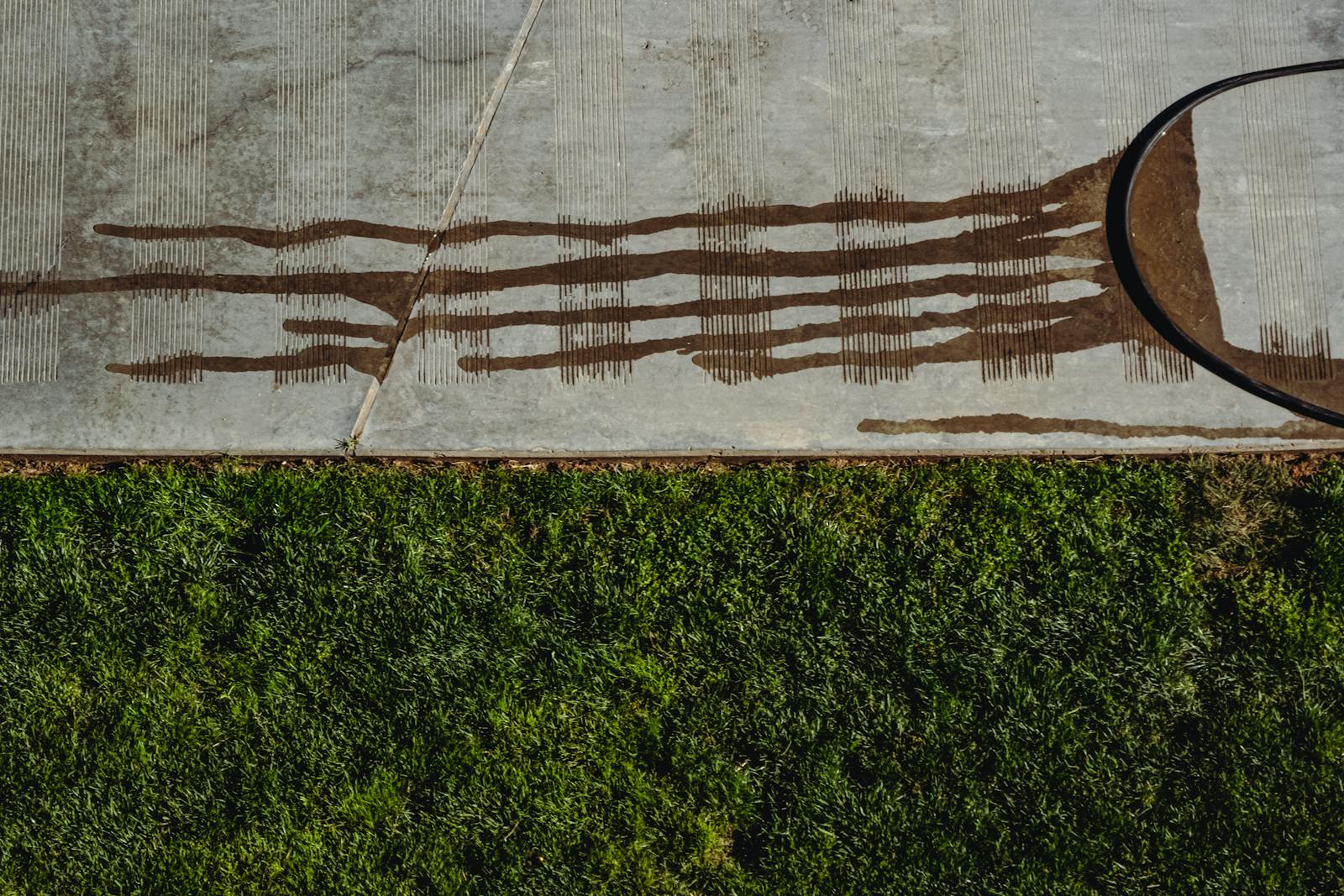
If you have noticed dark streaks, black patches, or a generally dirty greenish-gray appearance on your Bethesda driveway, you are not imagining things — and you are definitely not alone. Black streaks on residential concrete and pavers are one of the most common complaints we get from homeowners across our service area. The good news is that the cause is well understood, the fix is straightforward, and once you handle it the right way, you can prevent it from coming back as quickly.
What Those Black Streaks Actually Are
In most cases, what you are looking at is one of three things, often working together:
Algae and mold. The Bethesda climate is humid, shaded, and tree-covered, which means algae spores find a happy home on damp concrete. Algae looks green when it is actively growing and turns black or dark gray as it dries between rain events. North-facing driveways and any concrete shaded by trees or buildings are the most vulnerable.
Mildew and bacteria. Beyond visible algae, there are entire communities of microscopic organisms living in the porous surface of your concrete. They feed on organic matter, leave behind dark byproducts, and stain the surface from within rather than just sitting on top.
Tannin staining from leaves. Maryland's mature deciduous trees are beautiful in fall but brutal on driveways. Wet leaves left on concrete for even a few days release tannins — the same compounds that color tea and red wine — and they bond chemically with the surface. The result is dark, blotchy staining that can look exactly like algae from a distance but actually requires different treatment.
Why DIY Pressure Washing Often Fails
Most homeowners try pressure washing first. They rent a unit from the big-box store, blast the driveway for an afternoon, and end up with a mottled surface that looks worse in places than it did before they started. Here is why:
A pressure washer wand sprays in a narrow line. As you sweep it back and forth, you create overlapping zones of cleaning intensity that show up as visible stripes once the surface dries. Professional surface cleaners — those round, enclosed devices we use — solve this by spinning two precision nozzles inside a shroud, which delivers an even, consistent clean across the entire surface.
A pressure washer also cannot reach into the pores of the concrete to kill the bacteria living there. So even when the surface comes clean, the algae and mildew regrow within weeks because the source is still active.
The Right Way to Remove Black Streaks
Professional driveway cleaning in Bethesda combines three steps that home pressure washers cannot easily replicate:
Step one: targeted pretreatment. Specific stain types respond to specific chemistry. Tannin staining requires an oxalic-acid-based cleaner. Algae and mildew require sodium hypochlorite. Oil and rust each have their own treatment. A professional will identify the stain types on your driveway and pretreat them individually before any pressure is applied.
Step two: surface cleaning. Once pretreatments have had time to work, a commercial-grade surface cleaner does the actual cleaning. The shroud contains the spray, which means no overspray on cars or windows, and the spinning nozzles deliver an even, stripe-free clean across the entire flat surface.
Step three: edge detail and post-treatment. The wand finishes the spots a surface cleaner cannot reach — edges against your garage door, sidewalk seams, the strip down the center where most cleaners miss. A final post-treatment of biocide soaks into the pores to kill remaining organisms and slow regrowth.
How to Keep the Streaks Away
After a professional cleaning, there are simple steps you can take to extend the results:
- Sweep regularly. Leaves, grass clippings, and dirt feed the next round of algae. Keeping the surface clear cuts the regrowth rate dramatically.
- Trim back overhanging branches. Sunlight and airflow are the natural enemies of algae. Pruning trees that cast permanent shade over your driveway can extend the time between cleanings significantly.
- Address drainage issues. If water pools on a section of your driveway after every rain, you are creating an ideal home for algae. Fixing the drainage usually fixes the staining problem too.
- Consider sealing. A penetrating concrete sealer or a paver sealer reduces porosity, repels staining, and makes the next cleaning easier. Sealing is best done immediately after a thorough cleaning, while the surface is at its most prepared.
When to Call a Professional
If your driveway has visible streaking, blotchy staining, or a generally dingy appearance you cannot get rid of with rinsing, it is time for professional cleaning. A single annual service from a competent crew will keep your driveway looking great year-round and prevent the kind of permanent staining that develops when these issues are ignored for years at a time.
If you would like a free estimate for your Bethesda driveway, we would be glad to take a look. Most jobs in our area run between $200 and $500 depending on size and add-ons like sealing.